Villa Rica farm history
Goldworth Farm: The Work Beyond the Porch
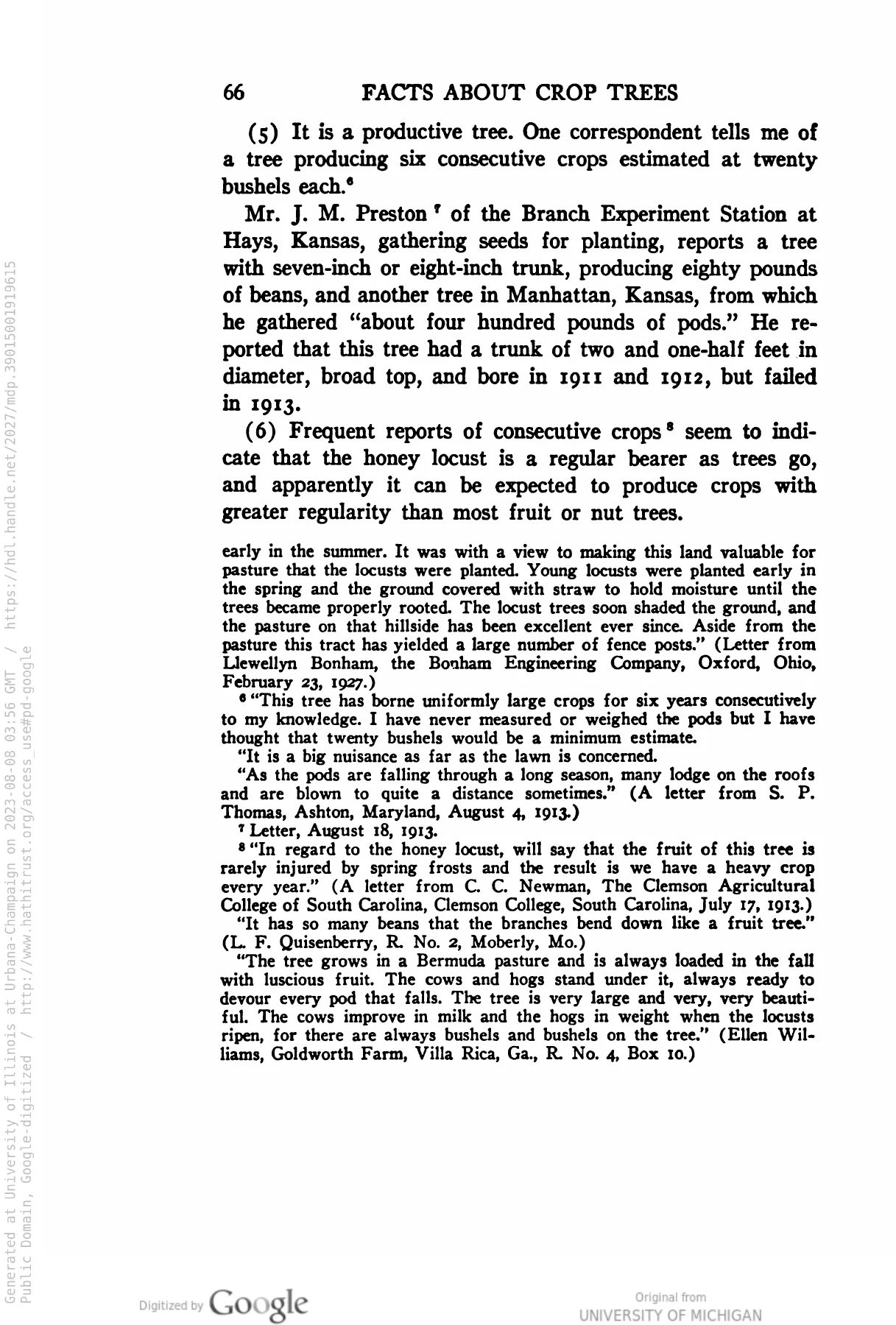
The cows and hogs gathered beneath the tree, ready for the next pod to fall. Ellen Williams described them in a passage published in 1929: a honeylocust growing in a Bermuda pasture at Goldworth Farm, near Villa Rica. She admired its beauty, but she also noticed what it fed. [1]
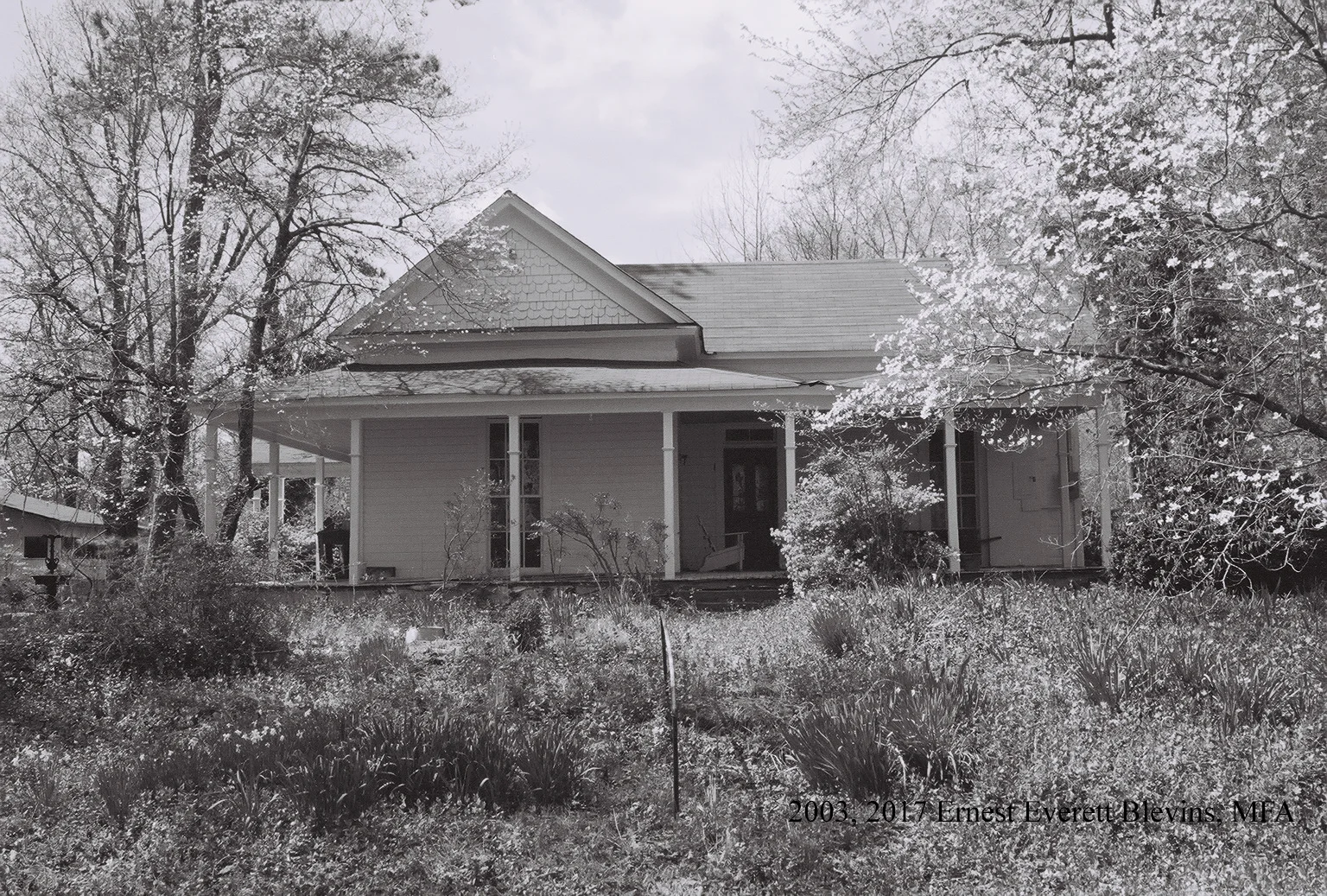

In this story
The family behind the farmhouse
Goldworth’s story reaches beyond its white farmhouse into the daily work of keeping animals, tending crops and finding customers. A family account published by Bill Mitchell in 1999 begins with John Worth and Martha Williams making a home from hand-hewn logs. The children slept in a loft reached by a ladder; a well supplied the household. [2]
Mitchell dated their larger house to 1891 and remembered that much of its lumber came from John’s father’s nearby farm. He described Jersey cattle, poultry, hogs, cotton, corn and hay—a livelihood spread across several kinds of work. After John’s death, Martha managed the farm with particular help from their son Felix. Tenant farmers also worked the land, although this account does not name them. [2]
The family name is well preserved. The names of everyone whose labor sustained the farm are much less complete. The memoir leaves room for other families’ accounts of the same place. [2]
Milk, water and the morning train
The National Register nomination describes butter and buttermilk traveling to Atlanta’s Grady Hospital on the morning accommodation train, with containers coming back in the evening. Ice inside special sleeves kept the milk cool. At the farm, butter was churned by hand and shaped into pound portions. [3]
Water connected the buildings. A hydraulic ram lifted spring water into an elevated wooden tank, which supplied the creamery and house by gravity. A wood-fired boiler provided steam for cleaning dairy equipment. In the 1920s, a Delco generator supplied electricity to the house and creamery. Behind the porch stood a small collection of systems for moving, cooling, cleaning and powering things. [3]
Ellen’s tree reaches a wider world
Ellen’s observations traveled farther than the pasture. J. Russell Smith included her account in Tree Crops: A Permanent Agriculture, published in New York in 1929. His honeylocust chapter drew together reports from farmers and experiment stations about trees that could provide feed. At the bottom of page 66, Goldworth Farm appears beside Ellen’s name and Villa Rica mailing address. [1]
She described a large tree with plentiful autumn pods. Cattle and hogs gathered underneath it; she believed the cows gave more milk and the hogs gained weight when the pods ripened. These were her observations, preserved in Smith’s book, rather than measurements from a controlled feeding experiment. [1]
The passage gives Ellen a voice of her own. She was watching an ordinary part of the farm closely enough to report how it fitted into the animals’ year. Smith put that practical knowledge into a discussion reaching well beyond Carroll County. We do not have to imagine a conversation on the porch: her printed account survives. [1]
A later botanical checklist adds another thread. In 1983, Frank Santamour and Alice McArdle discussed a honeylocust selection called Goldworth. They considered it probably the tree entered by Ellen Williams that won a 1928 Journal of Heredity competition. Their wording matters: the connection was probable, not certain. The record does not establish whether Ellen’s original tree survives. [4]
Another kind of work crew
Sixteen young men and an Army sergeant arrived in 1936 to prepare the camp site. The National Register nomination dates construction to 1937 and describes about 140 enrollees. Felix Williams and a county commissioner had gone to Washington to seek the camp. [3]
The later Avemore planning report connects the farm with Camp Lucretia, helping identify a name that appears as Lacretia in some accounts. The camp soon became part of the farm’s daily economy: its dairy supplied milk and dairy drinks, while mess-hall scraps fed the farm’s hogs. [3] [9]
The work extended beyond the camp itself. Villa Rica’s 2018 comprehensive plan connects the site with terracing worn cotton fields and planting kudzu for soil conservation. The farm nomination also records kudzu grown for hay and forage. What people hoped a planting would accomplish belongs beside the history of what followed. [3] [6]
Blevins’s later preservation account records furniture-making for other CCC camps, including the park now known as F. D. Roosevelt State Park. He places the camp’s departure around 1940–41 and describes buildings being removed while stone foundations remained. A vacant foundation can belong to a brief, busy chapter in a much longer farming history. [5]
Keeping the connections visible
Later preservation work tried to keep those connections understandable. UWG’s Williams-Mitchell Farm collection brings together interviews, architectural studies and a mapped investigation of the CCC camp. The farmhouse, work buildings and surrounding land were treated as parts of the same history. [8]
A later agreement concerning the proposed Avemore development made the choices more concrete. The document, accompanied by an October 2021 state preservation letter, called for a historic farm park, rehabilitation of several farm buildings, documentation of the silo and feed barn before any permitted demolition, and a public history story map. It also required plans for continued maintenance and public access. Those are documented commitments; this article has not verified their completion or present visitor access. [7]
A tank, a creamery, a train and a pasture tree: each opens another part of this farm’s working history. [1] [3]
Explore the original records
Open these records at the archive or family website for a closer look.
- The farm’s 2003 National Register photographs
The official file’s photograph set shows the house, dairy buildings, gardens and farm structures as documented then.
Sources and further reading
Research notes
The family memoir and National Register nomination share family testimony and are not wholly independent witnesses. They disagree on some dates and details; this edition does not settle John Williams’s death year, the earliest land purchases, the creamery’s exact construction year or the conflicting spring-distance units. The camp account is later preservation research, not an inspected original camp log. The 1929 book supplies Ellen’s published account, but neither it nor the later checklist establishes a surviving original tree. Historical photographs and preservation plans do not establish current condition or access. Camp Lucretia’s name is also supported by the municipal planning report. The camp land lay outside the nominated farm boundary. Local payrolls and a complete camp roster have not been examined. A Ray City history account names Paul Payne Patten as a Soil Conservation Service employee at the camp and attributes classes and furniture-making details to archaeologist Terri Lotti; these remain research leads rather than a reconstructed camp day. Patten is not established here as an enrollee. Ann McCleary’s September 28, 2021 letter in the preservation packet confirms a camp archaeology thesis, but its exact title and author remain unresolved.
- J. Russell Smith, Tree Crops: A Permanent Agriculture (1929), printed page 66
Original U.S. edition, PDF page 102, visually inspected. Footnote records Ellen Williams of Goldworth Farm, Villa Rica, describing livestock eating honeylocust pods. Her reported effects on milk and weight are observations, not a controlled trial. - Bill Mitchell, My Williams Connection, Carroll County Genealogical Quarterly, Summer 1999
Printed pages 44–45; page 44 visually inspected. Descendant’s account, including Martha’s management and tenant labor. - Williams Family Farm, National Register nomination (2005)
Printed pages 4 and 12–13: dairy transport, water and power. Physical descriptions combined with retrospective family testimony. Printed page 15 (PDF page 16), visually checked in this research: the 1936 advance party, 1937 construction, approximately 140 enrollees and dairy/mess-hall exchanges. Printed page 12 also records kudzu as forage. - Frank S. Santamour Jr. and Alice Jacot McArdle, Checklist of Cultivars of Honeylocust (1983)
Journal of Arboriculture 9(9), pages 249–250, Goldworth entry. The authors describe the link to Ellen’s prize tree as probable. - Ernest Everett Blevins, Camp Lacretia, Living New Deal (submitted 2017)
Later account citing his 2003 preservation study and camp lists. Camp chronology and furniture-making are attributed to this account; underlying camp logs not inspected. - City of Villa Rica, Comprehensive Plan, 2018 update, Appendix B
Printed B-12 links the CCC camp with terracing and kudzu planting. Its house date conflicts with the nomination and is not adopted. - Avemore development preservation agreement and supporting correspondence
City-hosted packet, PDF pages 1–4. The October 22, 2021 cover letter accompanies obligations for a farm park, building treatment, documentation and interpretation. Requirements are not proof of completed work. - University of West Georgia, Williams-Mitchell Farm Collection
Collection description identifies interviews, architectural analysis and CCC mapping. Unpublished collection contents were not inspected. - Villa Rica: Avemore Village planning report, RA-06-18
Recreational amenities passage connects the Williams–Mitchell Farm with Camp Lucretia. The report lists 2019 hearing dates; its hosting path is 2021. Proposed monuments are not proof of completion. - Ray City History Blog: Married on Thanksgiving (2021)
Secondary lead naming Paul Payne Patten as a Soil Conservation Service worker and quoting archaeologist Terri Lotti about camp training. Original linked article and employment records remain unexamined.
Read another local story
- The old ridges across a hillside
 Biscuits, pies and the people who fed West GeorgiaPublic domain. Published in New York in 1898; Library of Congress explicitly permits free use and reuse. Credit: Library of Congress / Internet Archive.
- Susan Hayward’s home beyond Hollywood
Share a photo, memory or landmark
Daniel reviews contributions before anything appears publicly.
Know someone who would enjoy this? Pass it along.