FAITH CLOSE TO HOME · PIEDMONT, ALABAMA & RISING FAWN, GEORGIA
The unarmed medic who kept going back
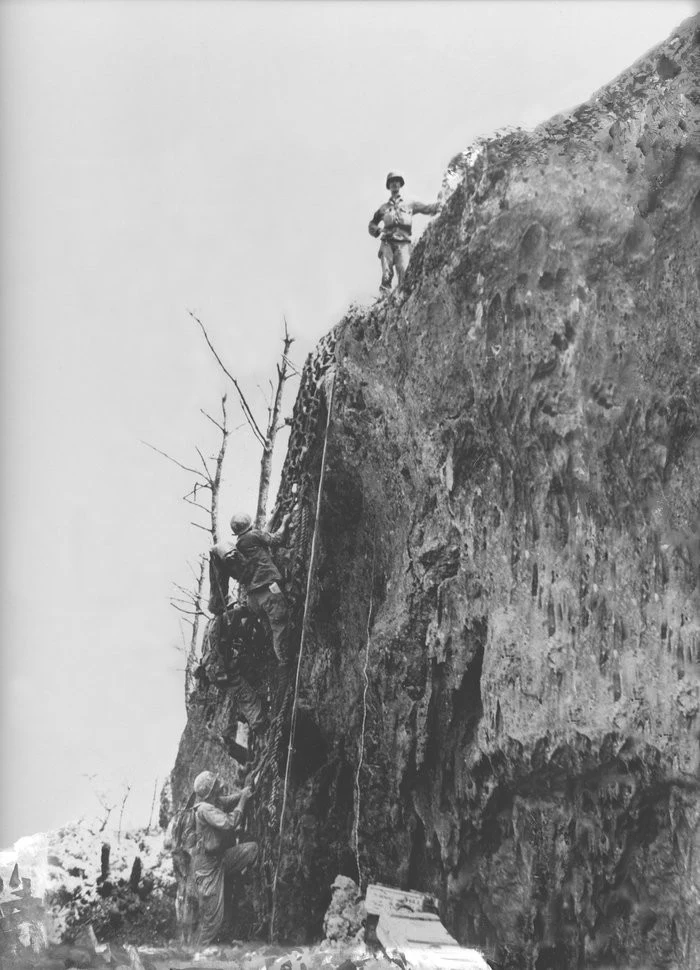
At Okinawa in 1945, American soldiers reached the top of a steep escarpment and came under devastating fire. Men fell. Others withdrew. Desmond Doss stayed with the wounded, brought them to the edge, and lowered them by rope to men below. His Medal of Honor citation records the rescue as part of weeks of repeated courage under fire. [1]
In this story
From Okinawa to our region
That battlefield was across the world. The man who survived it later lived much closer: Doss built a home near Rising Fawn in northwest Georgia and eventually lived in Piedmont, Alabama, where he died in 2006. His story belongs to the history of war and conscience, with a genuine connection to this region's later life. [2]
A conviction that carried a cost
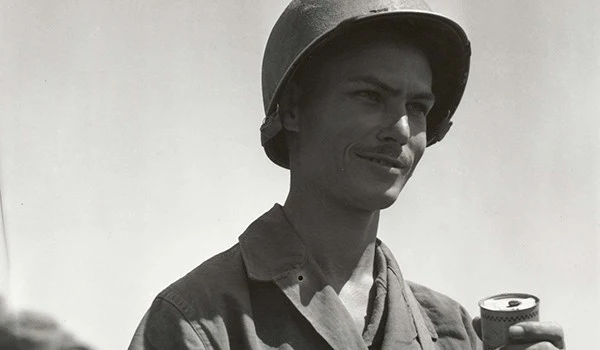
Doss's Christian faith shaped his decision to serve as a medic while refusing to carry a weapon. In an Army oral history recorded in 1987, he explained that he could have remained in defense work at a shipyard but wanted to serve his country. A Seventh-day Adventist, he understood preserving life as his calling. He preferred to describe himself as a conscientious cooperator. [3]
The distinction did not immediately win his fellow soldiers' respect. Doss recalled shoes thrown while he prayed and sarcastic remarks about his convictions. He also remembered relationships changing as the men learned they could trust him. In his telling, Sabbath observance allowed the medical care that people needed on every day of the week. [3]
One wounded man at a time
The number most often associated with the escarpment rescue is seventy-five. It is best understood as an estimate: the Library of Virginia records Doss recalling that his own estimate was fifty, while his commanding officer proposed one hundred. Seventy-five became the accepted figure. The uncertainty concerns a count made amid battle; the rescue itself is documented in the military record. [2] [1]
An Army account reports that he asked GOD for strength to reach another wounded man after each rescue. That remembered prayer helps explain the small scale on which an immense act of courage was carried out. There was another injured person to reach, another body to move, another lowering to complete. [4]
His citation also describes later rescues near enemy positions. When a grenade wounded his legs, he treated himself and waited for help. On a stretcher, he gave his place to a more seriously injured man. After another wound broke his arm, he used a rifle stock as a splint and crawled toward treatment. The record is extraordinary without embellishment. [1]
The long life after the medal
President Harry Truman presented Doss with the Medal of Honor in October 1945. An Army account adds a striking detail: confusion over his whereabouts had led to news of his death reaching home. Doss wrote to his mother to show that he was alive. The celebrated rescue was followed by the very human work of getting accurate news back to a worried family. [4]
Recovery took years. Doss endured tuberculosis and major surgery, and his wartime injuries affected the remainder of his life. The Georgia years included family life and public speaking. His final home was in Piedmont; he was buried in Chattanooga National Cemetery. Survival had given him more years, along with lasting physical costs. [2]
The Library of Congress preserves an oral-history collection containing interviews, photographs, and personal documents. Those records let a reader look beyond a dramatic retelling and encounter the veteran himself. His story can be investigated through testimony and official records together. [5]
A neighbor's life
Christians differ over military service and the use of force. This story does not settle that whole question. It does give us a concrete example of a man taking the preservation of his neighbors' lives seriously, at enormous cost to himself.
Jesus' account of the Samaritan directs attention to mercy that takes practical form: approaching the wounded, tending injuries, and bearing a burden (Luke 10:33–37). Doss's actions invite that kind of examination of our own lives. The Christian's acceptance before GOD rests in Christ's saving work, received by grace through faith; good works are its fruit (Ephesians 2:8–10). The question we carry home is whether love is moving us toward the person who needs help.
Sources and further reading
- Desmond T. Doss Medal of Honor Citation — U.S. Army Medical Department
Official citation for rescues during the Okinawa campaign. - Desmond Thomas Doss — Dictionary of Virginia Biography, Library of Virginia
Postwar life, regional homes and the approximate rescue count. - Desmond Doss Oral History Interview, March 20, 1987 — U.S. Army
Doss’s recorded testimony; the transcript marks inaudible passages. - Pfc. Desmond Doss: The Unlikely Hero Behind ‘Hacksaw Ridge’ — U.S. Army / DoD News
Army account of his prayer, medal and letter home. - Desmond Thomas Doss Collection — Library of Congress Veterans History Project
Original interviews, photographs and documents; individual reproduction rights vary.
Read another local story
 Sentenced to four years for refusing to leaveNational Archives · Public domain.
 The Christmas bomb that did not stop Fred ShuttlesworthJet Lowe / Historic American Buildings Survey, Library of Congress · Public domain.
- Faith close to home
Share a photo, memory or landmark
Daniel reviews contributions before anything appears publicly.
Know someone who would enjoy this? Pass it along.