FAITH CLOSE TO HOME · CARTERSVILLE & VAN WERT, GEORGIA
The Cartersville preacher behind the Ryman
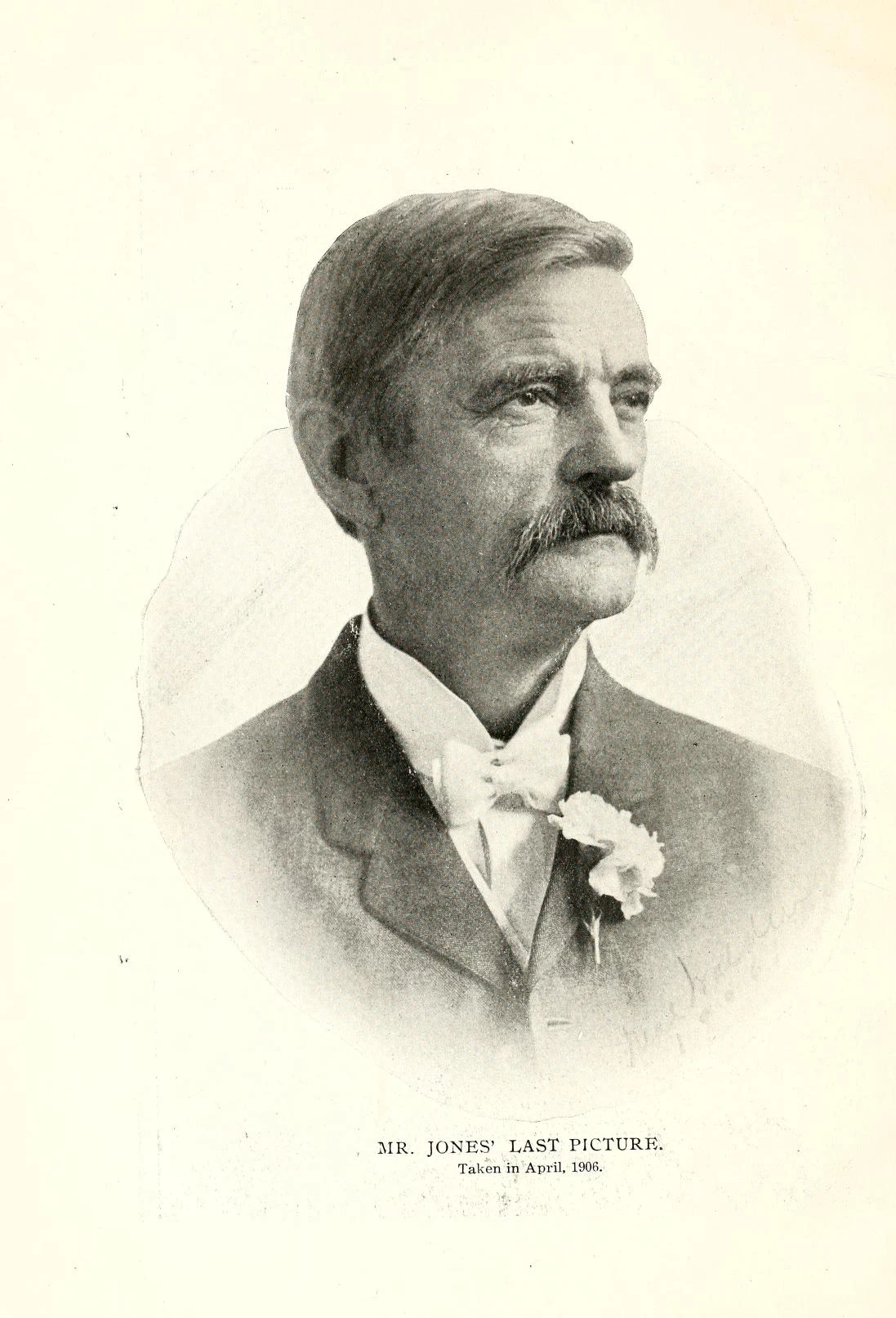
Before Sam Jones became a famous preacher, his drinking had helped wreck his work as a lawyer. Born in Oak Bowery, Alabama, in 1847 and raised largely in Cartersville, he came from a family full of Methodist ministers. That inheritance had not kept his own life from coming apart. In 1872, beside his dying father, Jones promised to stop drinking. His struggle included lapses; the historical account does not give us a flawless overnight transformation. It does describe a religious turning point that led him toward ministry. [1]
In this story
Before the crowds
His early assignment was the Van Wert circuit: five churches spread across four counties. For readers around Haralson, this brings the beginning of his preaching life much closer than the famous Nashville connection might suggest. Van Wert is at the eastern edge of present-day Rockmart. Jones's wider reputation grew out of work among scattered congregations in northwest Georgia. [1] [2]

A town becomes a gathering place
Cartersville eventually became a destination for people who wanted to hear him. Local historical research traces plans for his tabernacle to an 1886 meeting reported in the Courant American. Land transactions, trustees, construction, and newspaper advertisements followed. The surviving details give the revival movement a physical shape: somebody had to acquire the ground, arrange the seats, and make room for the crowds. [3]
Railroads advertised excursion fares. People also came on horseback, by buggy, and on foot. Some lodged with local families or camped nearby. Later improvements included more seats with backs, lighting, and a place to check bundles and baskets. These ordinary arrangements helped thousands gather to hear preaching. The great meetings depended on practical work as well as a voice on a platform. [3]
The sermon that reached a riverboat captain
In Nashville, Jones's preaching reached Thomas Ryman, a prosperous riverboat captain. The auditorium's own history identifies Ryman's conversion under Jones's preaching as the beginning of his ambition to build a substantial religious meeting place. With community help, that ambition became the Union Gospel Tabernacle, which opened in 1892. [4]
The building's future stretched beyond its founder's original purpose. Religious gatherings shared its calendar with music and other public events. After Ryman's death, his name became attached to the auditorium. The Grand Ole Opry moved there in 1943 and remained until 1974. An important strand in that familiar musical history therefore runs back through a Georgia evangelist and a hearer's response to a sermon. [4]
An honest account includes the failures
Jones's record also contains serious wrong. Historian Anderson Rouse documents his defense of white supremacy and racial separation, drawing on his newspaper columns and reported sermons. His kindness toward particular Black neighbors did not erase those convictions. A Christian account should acknowledge that failure plainly. A powerful speaker can challenge one kind of sin while excusing another. [5]
His reputation also rested heavily on demands for moral reform. Historian David Parker describes a preacher impatient with theological discussion and fiercely opposed to alcohol and various popular amusements. The crowds and the memorable sayings do not relieve us of the duty to examine his teaching. [1]
The records lead back to people
At the University of Georgia, the Sam P. Jones papers preserve correspondence, sermon material, financial records, and family journals. Many letters concern speaking invitations or responses to his appearances. Laura Jones's diaries record daily and social life in Cartersville. Those collections offer a way to keep exploring beyond the celebrated platform and into the household and community around it. [6]
A Christian reflection
The story gives us reason to take repentance seriously and to resist putting a preacher beyond correction. Christian hope rests in Jesus Christ, who died for sinners and rose again. A changed habit, an impressive crowd, or a famous building cannot purchase acceptance before GOD. Salvation is His gift through faith; good works follow as its fruit (Ephesians 2:8–10).
We can be grateful for a life redirected, interested in the extraordinary consequences, and honest about the wrong that remained. That honesty makes room for the question every generation must face: where does Scripture still need to correct us?
Sources and further reading
- David B. Parker, Sam Jones — New Georgia Encyclopedia
Life, ministry and preaching. - Old Van Wert–Polk County historical marker — Georgia Historical Society
Location of Van Wert. - Joe F. Head, The Sam Jones Tabernacle — Etowah Valley Historical Society
Tabernacle research using local newspapers and land records. - History of Nashville Auditorium — Ryman Auditorium
Institutional history of the auditorium. - Anderson R. Rouse, Keeping Up with the Joneses (2024) — UNC Greensboro
Historical analysis of Jones’s racial views, drawing on columns and sermons. - Sam P. Jones papers, 1863–1950 — Hargrett Library, University of Georgia
Collection guide; individual manuscripts were not inspected.
Read another local story
 After the tornado, Goshen kept gatheringNational Weather Service, Birmingham · Public domain.
 The unarmed medic who kept going backU.S. Army · Public domain.
- Faith close to home
Share a photo, memory or landmark
Daniel reviews contributions before anything appears publicly.
Know someone who would enjoy this? Pass it along.