A father and son at Royal Vindicator
The Gold You Never See
At Royal Vindicator near Tallapoosa, Georgia, the machines are easy to photograph. The gold takes more explaining.
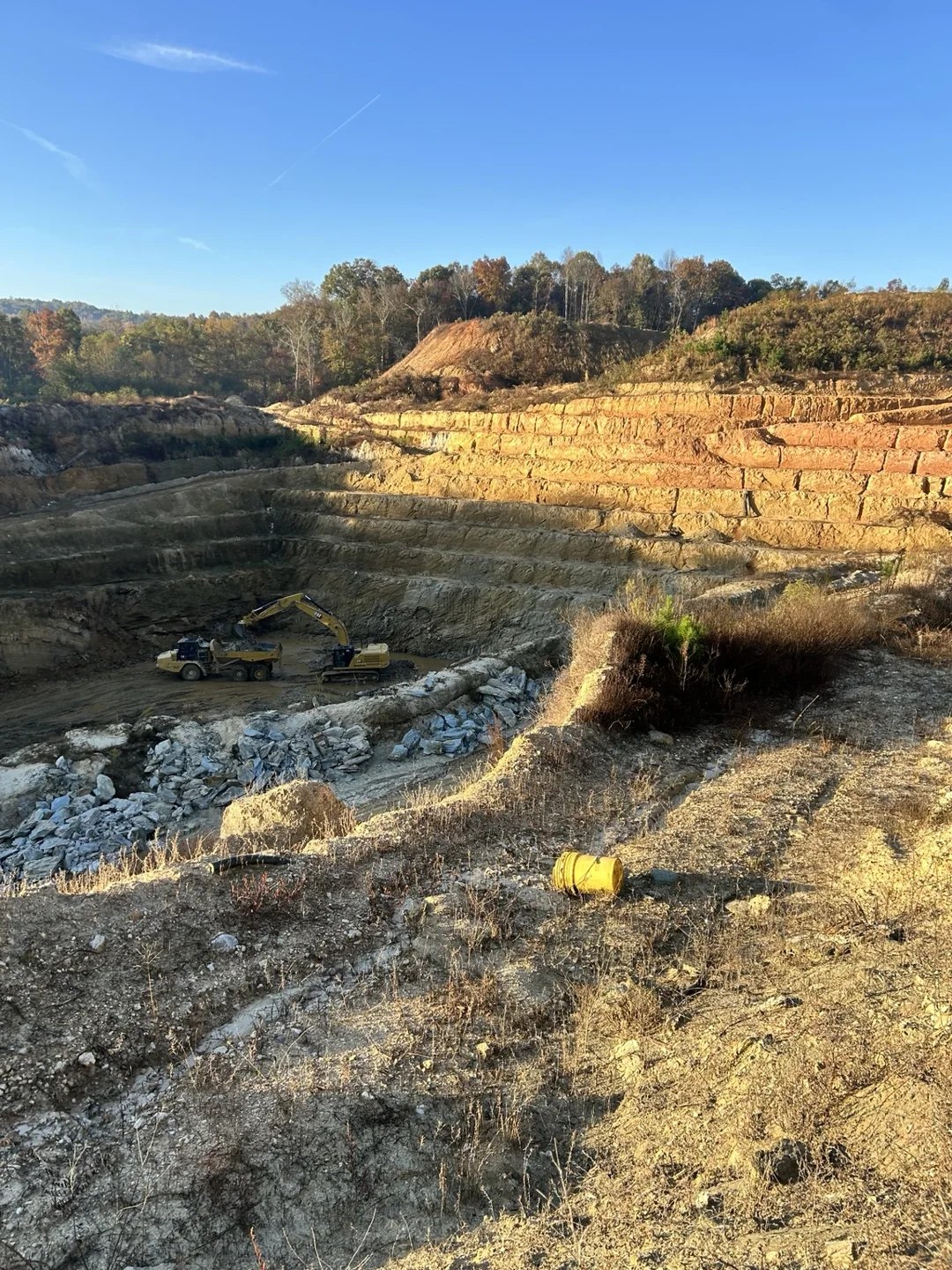
In one of our photographs, an excavator reaches toward a haul truck below the stepped walls of the pit. Trees stand along the rim. Sunlight falls across the exposed ground.
When my son Austin and I visited on October 30, mine operations chief Mike Musselwhite helped us understand the work behind that scene. Long before anyone has a finished piece of gold to hold, the crew has to test the rock, decide what to move, prepare the ore and recover the gold.
Mike explained that carbon carrying recovered gold leaves the mine for further processing. We followed the work that comes before a bar is poured.
Gold mining here is something people still have to make work, one load of rock and one decision at a time. But our visit also had room for something simpler: Austin enjoyed playing with Rex, the mine dog. While I was learning about the ore, he was getting acquainted with another part of life at Royal Vindicator. [1]
In this story
A workday shaped by the ground
I asked Mike about the daily rhythm. Weather, maintenance and equipment problems can change the plan, he told me.
He described a crew of roughly nine or ten people. Coordinating their work means accounting for the machines available, the material being mined and the conditions on the property. An excavator loading a truck is the visible part of a much larger job.
Mike also explained why the operation stockpiles material ahead of wetter months. Mud and flooding can interfere with work in the pit. Preparing material while conditions allow gives the processing side something to draw on later.
For anyone who works outdoors, that part of the explanation is familiar. Work depends on more than what you hope to accomplish that morning. The weather and the equipment get a say. [1]
Finding out what the rock contains
Before a load can be worth processing, the crew needs to know something about its contents.
Mike described collecting samples from the rock face in five-gallon buckets and testing them to guide the work. He also described blending material to make the batches going into processing more consistent. Two loads that look much alike can have different value to the operation. [1]
Geologist Travis A. Paris’s published study helps explain why appearances can mislead. In the Royal Vindicator material he examined, gold particles ranged from 0.0005 to 2 millimeters in their longest dimension. Some occurred within or attached to pyrite grains. The smallest were far too small to identify with the unaided eye.
Paris also reported only trace to undetectable gold in milky quartz veins cutting through the gold-bearing zone. A conspicuous piece of white quartz was no guarantee of rich ore. His findings concern the samples he studied, but they explain why testing matters more than a promising-looking rock. [2]
Standing beside an exposed face, a visitor can see color, layers and broken stone. The crew needs answers that a photograph cannot provide.
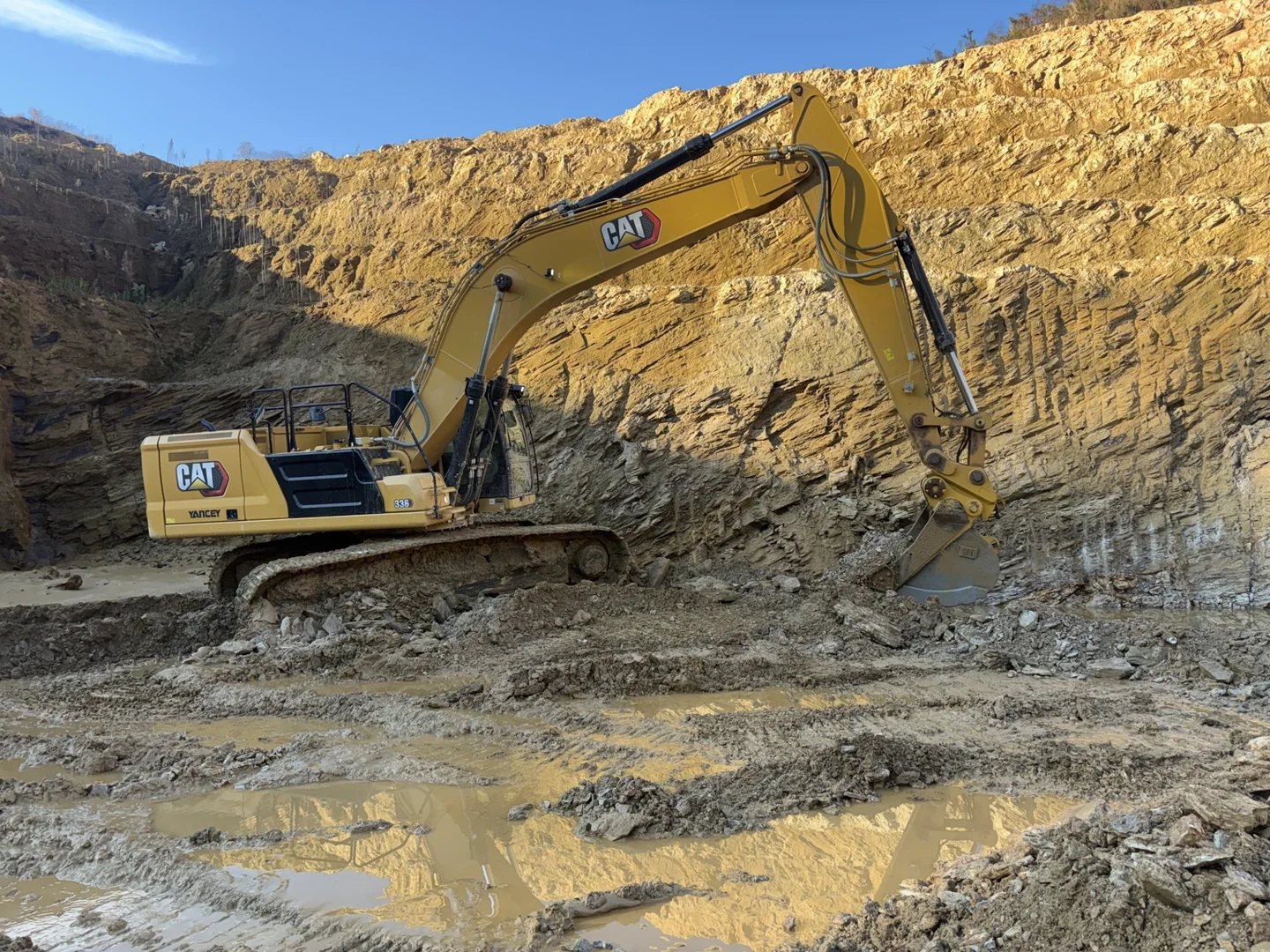
Preparing the ore for liquid to pass through
Moving selected rock out of the pit is only the beginning of recovery.
As I understood Mike’s explanation, the first crusher reduces the ore to roughly one-inch material. Further preparation includes Portland cement and produces small clumps that reminded me of Dippin’ Dots. They held together when picked up, but crumbled almost to dust when squeezed in the hand. The term for forming those clumps is agglomeration. [1]
The reason for clumping crushed material is less obvious than the reason for crushing it. Very fine particles can slow or block the passage of liquid through a heap. Bureau of Mines research describes using cement as a binder to gather fine material into larger agglomerates and improve the flow of the solution used to dissolve the gold. [3]
The preparation has to leave a path through the material. The next stage depends on liquid reaching the gold.
Chester Holdings USA, the operator, identifies Royal Vindicator’s method as heap leaching followed by recovery onto activated carbon. Its published explanation says a dilute cyanide solution dissolves gold from the ore. [4]
In this kind of recovery, gold passes into solution as a dissolved chemical complex. Activated carbon captures that gold-bearing complex on its surfaces, a process called adsorption. Further treatment is needed to recover the metal from the loaded carbon. [5]
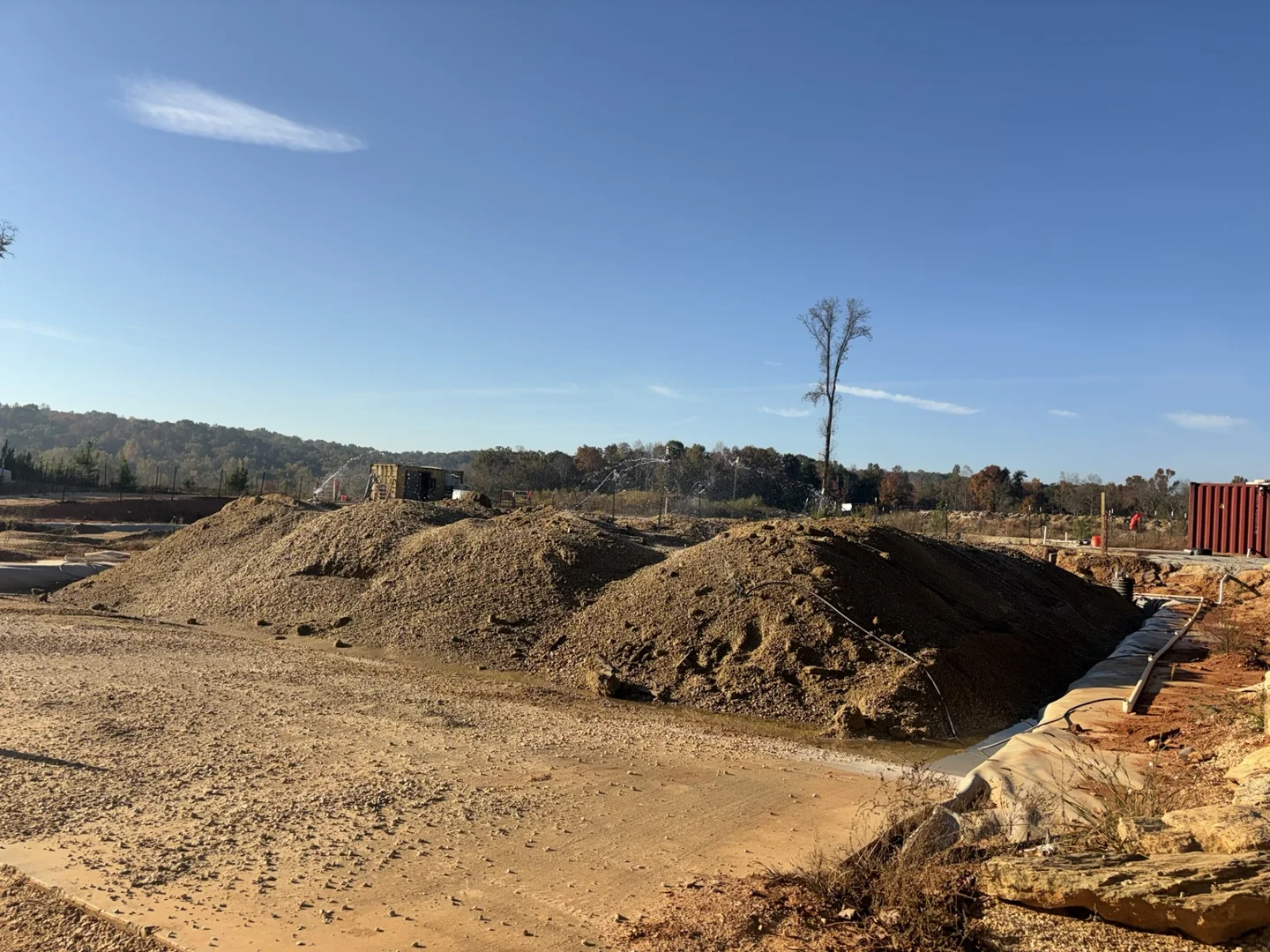
Mike described sprinklers applying solution over the prepared material, collection underneath and circulation through the carbon stage before reuse. He explained that the loaded carbon is shipped away for further processing. [1]
That changes how you look at the operation. Excavators and trucks move a great deal of material so that a small part of it can eventually leave in a different form. The work continues after the carbon leaves the property.
The recovery problem has a history
The older workings bring another generation of miners into view.
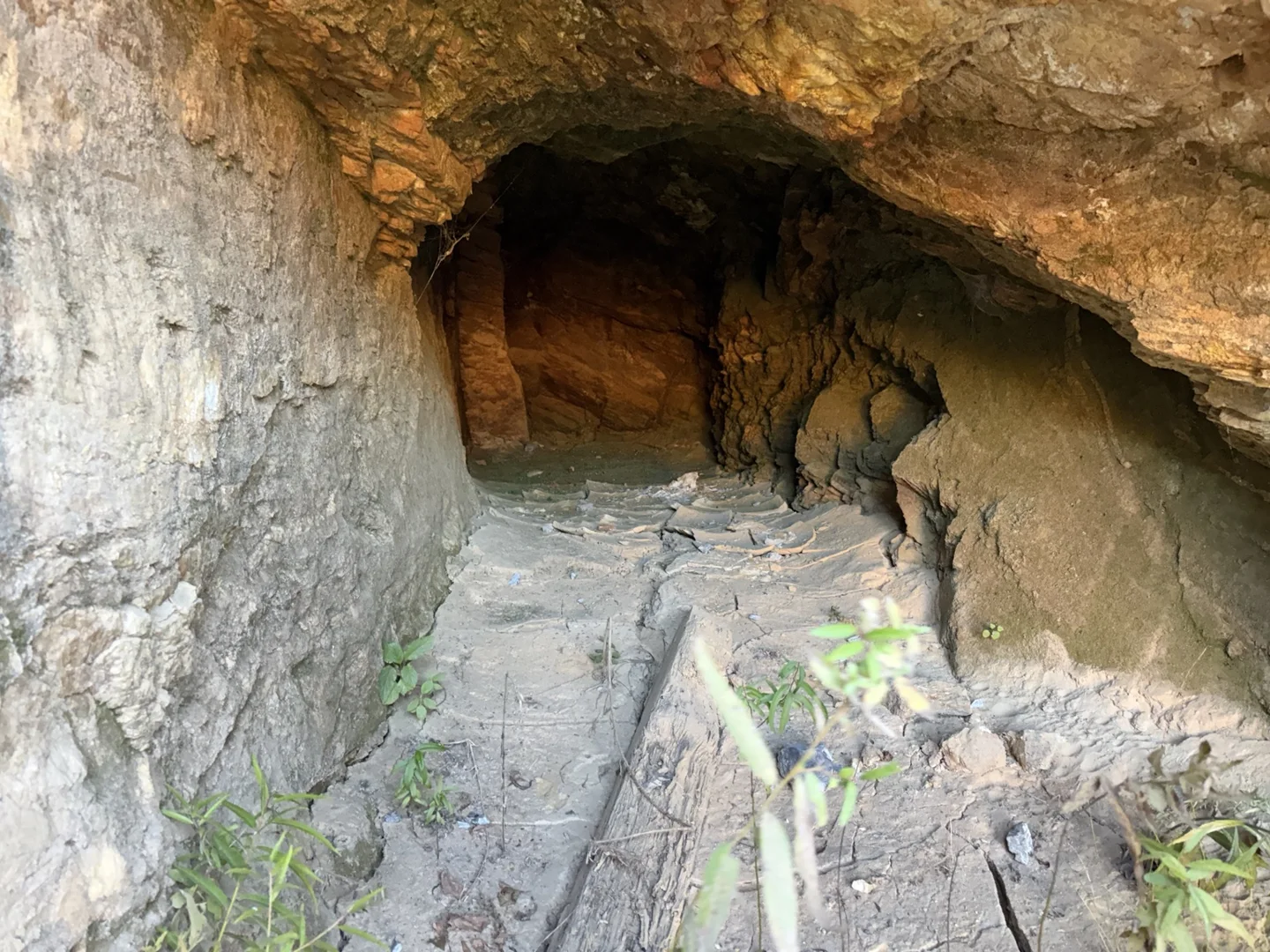
Our photographs include openings shown to us as remnants of earlier mining. One view looks along a rough passage, with rubble and wood on its floor. The opening has not yet been matched to a dated mine plan, but it makes the older method of reaching the rock visible beside the modern pit. [1]
The 1896 Georgia geological survey describes this property under the name Hollins Mine. A footnote records its purchase by the Royal Gold Mining Company and its new Royal name.
The report describes shafts and horizontal workings, then explains why the mills struggled to recover the gold. The ore contained abundant sulfide minerals. Finding gold-bearing rock and successfully saving its gold were separate problems. [6]
That distinction links the old records to what Mike showed us. The machines and treatment methods have changed. The value of the work still depends on getting gold out of the material that holds it.
More than a collection of machines
The same 1896 report lists seven laborers’ cottages, a commissary, a blacksmith shop, a superintendent’s residence and an assay office alongside the mine’s equipment. Those buildings put homes, supplies, repairs and testing around the workings. [6]
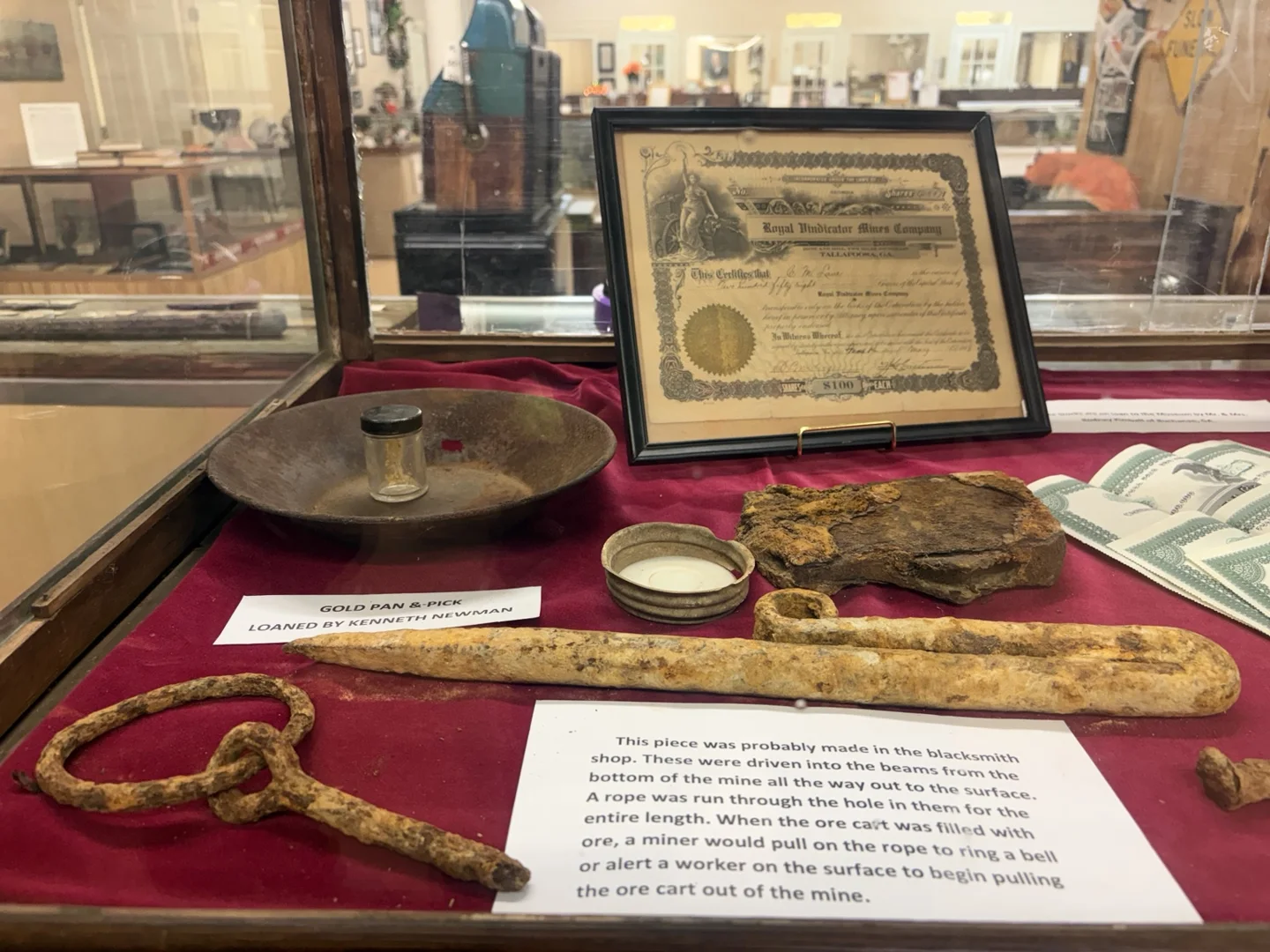
At the West Georgia Museum in Tallapoosa, a display label credits Kenneth Newman with lending a gold pan and pick. Another label explains a fitting through which a signaling rope ran: a miner could pull the rope to ring a bell and alert someone on the surface that an ore cart was ready to be pulled out. The museum’s interpretation puts a human action back among the surviving objects. [7]
Mike’s connection to that history reaches into the museum, too. As I understood it from our visit, he had worked with Bud Jones to help get mining artifacts into the displays. His interest extended beyond explaining the operation in front of us to preserving what earlier miners had left behind. [1]
There was another story of care on the property. Mike told us Rex had shown up skinny, and the crew had helped get him healthy. By the time we met him, he looked well fed. Austin enjoyed playing with him, and the workers’ affection for the dog was part of what we saw that day. [1]
Looking again at the photograph of the excavator and truck, I can follow more of what lies beyond the frame: the samples, preparation and recovery that make the work possible. Mike had taken the time to explain those connections. Our visit also left us with a memory that would never appear on a process diagram.
Before we left, some of the workers were calling Rex for lunch. [1]
Royal Vindicator is a private working mine. Entry requires permission. We arranged our visit in advance.
Sources and research notes
- Daniel Moss’s field reporting
Daniel Moss, reporting notes, photographs and later recollections of the October 30, 2026 visit with Austin. Tour explanations are paraphrases, not a verbatim recording. - Travis A. Paris, Georgia Geologic Survey Bulletin 117 (1990)
Travis A. Paris, “The Royal Vindicator Gold Deposit, Haralson County, Georgia: A Metamorphosed Epithermal Hot-Springs Type Gold Deposit,” in Georgia Geologic Survey Bulletin 117, 1990, especially printed pp. 69-70 and the ore descriptions. The historical samples do not establish present production grades. - U.S. Bureau of Mines, Information Circular 8945
Judith A. Eisele, Danny L. Pool and G. E. McClelland, Agglomeration-Heap Leaching Operations in the Precious Metals Industry, U.S. Bureau of Mines Information Circular 8945, 1984. General engineering explanation, not a specification for Royal’s equipment or recipe. - Chester Holdings USA’s description of the mine
Chester Holdings USA, The Royal Vindicator Gold Mine and Questions people ask, checked November 4, 2026. These support the attributed operator description, not an independent compliance finding. - U.S. Environmental Protection Agency, Gold and Silver
U.S. Environmental Protection Agency, Gold and Silver, general processing discussion. Used for the explanation of leaching and carbon adsorption, not the identity of Royal’s current downstream processor. - Georgia Geological Survey Bulletin 4-A (1896)
W. S. Yeates, S. W. McCallie and F. P. King, A Preliminary Report on a Part of the Gold Deposits of Georgia, Georgia Geological Survey Bulletin 4-A, 1896, printed pp. 250-252, Hollins Mine section and Royal footnote. - Tallapoosa museum exhibit labels
Daniel’s photograph IMG_3997.jpeg and the label review preserved in the visit notebook. Kenneth Newman’s lending credit is attached to the pan and pick; it does not establish that he worked at the mine.
Read another local story
 Royal-Vindicator: the machinery behind Haralson's goldPublic-domain original publication; Georgia Geological Survey / Digital Library of Georgia.
- A Little Gold in Haralson CountyPublic-domain original publication; Georgia Geological Survey / Digital Library of Georgia.
What story should we tell next?
Is there a person, place or piece of local history you’d like to see on Moss & Sons? Perhaps your family has photographs, letters, an old business record—or a memory you’d like to share.
You don’t need to have the whole story. Tell us what you know, and we can start there. Daniel reviews contributions and confirms permission before anything is published.
Know someone who would enjoy this? Pass it along.