TEMPLE, GEORGIA · SCHOOL & COMMUNITY
The school downstairs in Temple
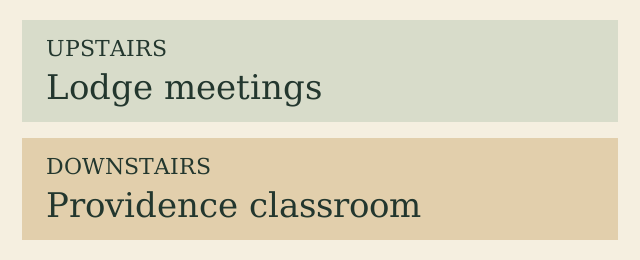
In Temple, Georgia, Black families once sent their children to class on the ground floor of a Masonic hall. The Masons met upstairs. In 1896, members of New Canaan Baptist Church and neighboring Griffin Chapel Methodist Church joined Prince Hall Masons to build the hall. Room for a school was part of the plan from the beginning. [1]
In this story
A school below the lodge
We know who gave the school its name because Carolyn Gray, the daughter of a Providence trustee, wrote down its history. L. D. Spear, the first principal, called it Providence. At the building people knew as the Old Mason Hall, children could study through eighth grade. [1]
Two Army buildings in one town
After World War II, Providence moved into surplus Army barracks brought from Fort Oglethorpe to Otis Street. Gray wrote that the school then taught grades one through ten. A family photograph in her account shows Providence graduate Freddie Johnson Jr. beside a car in front of the long school building. His nephew, the Rev. James Burr, supplied the picture. [1]
The same Army post supplied a building for another school in Temple. In 1948, Temple High students and local men went to Fort Oglethorpe, took a building apart and put it back together on the Sage Street campus. It became the school’s first gym. Sage Street already had a brick building with science labs, a library and an auditorium. Put the two school histories together and you see what segregation meant in one town. An Army building gave one campus a gym. For Black children on Otis Street, barracks housed the school itself. [2]
Where neighbors found room
Providence had a counterpart in neighboring Douglas County. The survey of Beulah Grove Lodge describes traces of white paint on the schoolroom walls and an opening in one corner where the stairs once rose to the lodge room. The school there was called Pleasant Grove. Grady Hindsman, who attended another school nearby, remembered Rosa Lindley and Louise Stephens Shackelford among its pupils. He estimated that about thirty children attended across seven grades. [3]
In Temple, Providence trustees Earl C. Luke, L. C. Powell and Leonard Gray tried to raise money for better quarters. Carolyn Gray recalled that the county board told them private citizens could not own and operate a public school. The board bought the Providence property. The barracks continued to serve elementary pupils until a brick school opened in 1958. [1]
The proceeds went back into the neighborhood. According to Gray, each founding church received a share, and the trustees set aside a third portion for a community center beside New Canaan. Did that center open? A church program naming a supper or a reunion there could carry the story one step further. [1]
Sources and research notes
- Carolyn Gray, “How We Got Over,” The Journey, spring 2009, pp. 3–4. Includes the Johnson family photograph.
- Temple High School campus history. The 1939 Sage Street building and the 1948 Army gym.
- Beulah Grove Lodge and Pleasant Grove School nomination, sections 7–8. Douglas County survey and interviews.
Read another local story
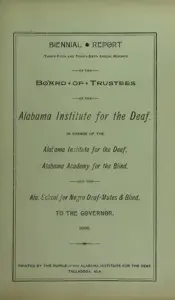 Who printed the governor’s copy?Original cover of the trustees’ 1896 report to Alabama’s governor. Below the date, the pupils at the Alabama Institute for the Deaf receive the printing credit. Internet Archive scan.
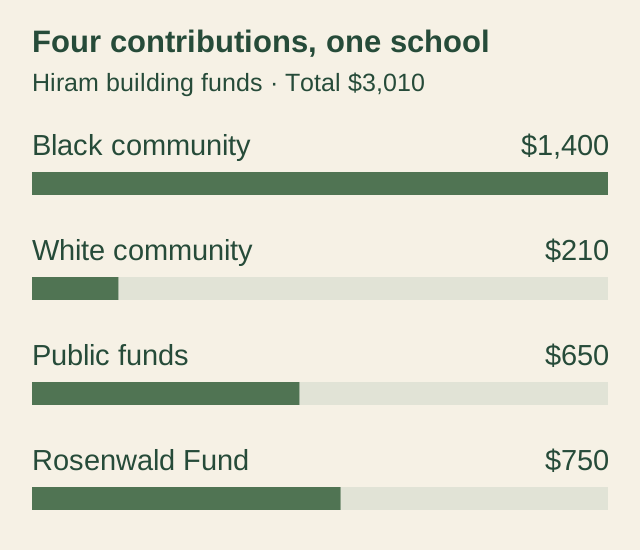 The school Hiram helped pay forMoss & Sons · Original explanatory illustration; evidence and sources in the article.
What story should we tell next?
Is there a person, place or piece of local history you’d like to see on Moss & Sons? Perhaps your family has photographs, letters, an old business record—or a memory you’d like to share.
You don’t need to have the whole story. Tell us what you know, and we can start there. Daniel reviews contributions and confirms permission before anything is published.
Know someone who would enjoy this? Pass it along.