TALLAPOOSA · READING THE RECORD
The Town They Promised
Before Tallapoosa’s hotel became a memory, the town was being offered as a future.
On March 1, 1890, an advertisement in an Oregon newspaper invited readers to consider a place far away in Georgia. It offered a combination hard to ignore: industrial opportunity, an agreeable climate and mineral springs. Then it added urgency. Building lots, the advertiser predicted, would double in value before the year ended.1
This was Tallapoosa in Haralson County—the town whose vanished Lithia Springs Hotel we have been tracing through photographs and surviving spring grounds. Looking at the advertisement helps answer a question the ruins cannot: what were newcomers being encouraged to believe?
First, look at the promise
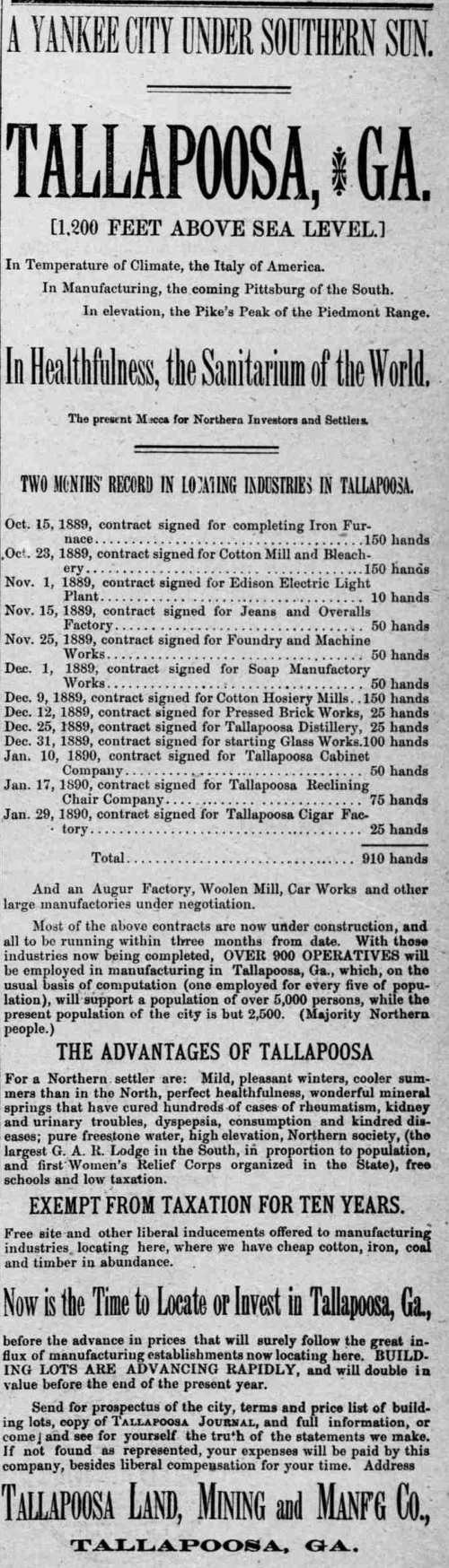
Read the page from top to bottom. The comparisons make Tallapoosa seem familiar and extraordinary at once: an inviting climate, a manufacturing future and the attraction of a health resort. Below them comes a list of industrial ventures. Near the bottom, the appeal turns to land and the advantage of buying early.
That order is part of the persuasion. First imagine a place where you would want to live. Then imagine work and customers arriving. Finally imagine what land might be worth if all of it happened.
What the list actually says
The factory list records contracts, with projected employment beside them. Those entries are evidence of the company’s advertised plans; they are not a payroll. Likewise, the sweeping disease-cure claims establish what the advertiser said, not whether the springs healed anyone.
The company even offered to reimburse a visitor if the town was not as represented. That was a promise a distant reader could find reassuring. The advertisement alone cannot tell us whether anyone claimed or received that reimbursement.1
A promise tells us what people were invited to expect. A second record is needed to show what happened.
Follow the company, then the outcome
The name at the bottom matters. This advertisement belongs to the Tallapoosa Land, Mining and Manufacturing Company. A later enterprise, the Georgia-Alabama Investment and Development Company, also promoted the town. Similar ambitions do not make their advertisements, officers or obligations interchangeable.
The district history dates the first company to 1887 and the Georgia-Alabama company to 1890. It records real development: the furnace and glass works operating in 1891, other factories operating or under construction, and renewed hotel work. It also records the later company’s receivership and asset sale.2 A receiver administers property under court authority when financial affairs have become troubled.
Company timeline: 1887–1893
- 1887 · The first companyThe Tallapoosa Land, Mining and Manufacturing Company begins its development campaign.
- 1890–1891 · A wider sales pitchThe Georgia-Alabama company promotes investment while factories and the hotel feature in the town’s development.
- June 6, 1892 · ReceivershipThe district history dates the appointment of C. A. Norton as permanent receiver to this day.
- April 20, 1893 · Asset saleThe same history records a public auction of the company’s property.
The failed investment enterprise is only one part of Tallapoosa’s history. A factory’s opening, a company’s collapse and a hotel’s closing are different events. Our industrial story follows the dated factory maps; the hotel chronology follows the building’s changing uses.
Bring the question back to the ground
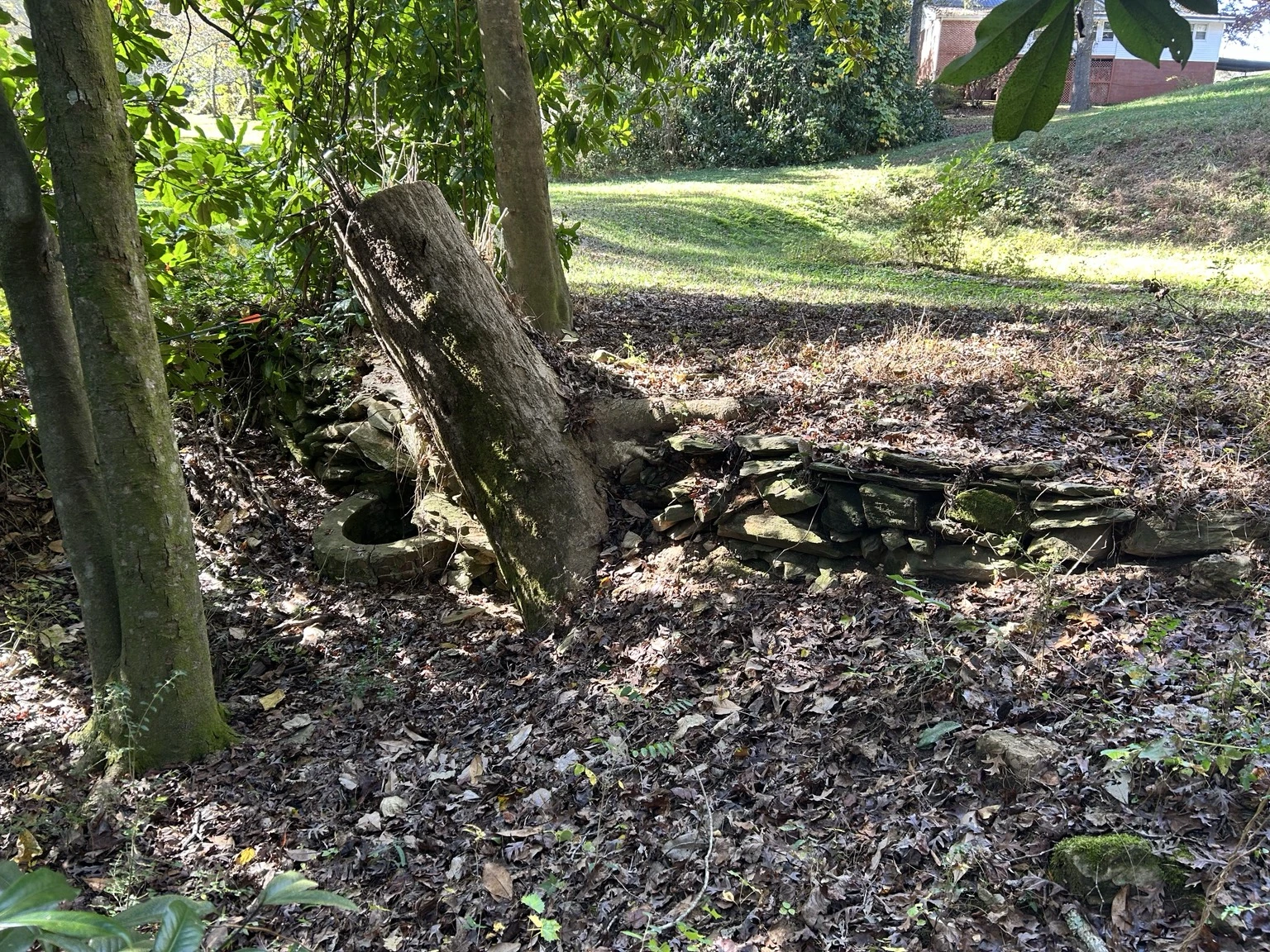
Beside the broken tree, the curved rim and stone wall are things we can see. Their dates and original purposes are harder to recover. The advertisement explains the appeal of the springs, but it does not identify this particular structure. That connection needs evidence of its own.
See the illustrated study beside the photograph
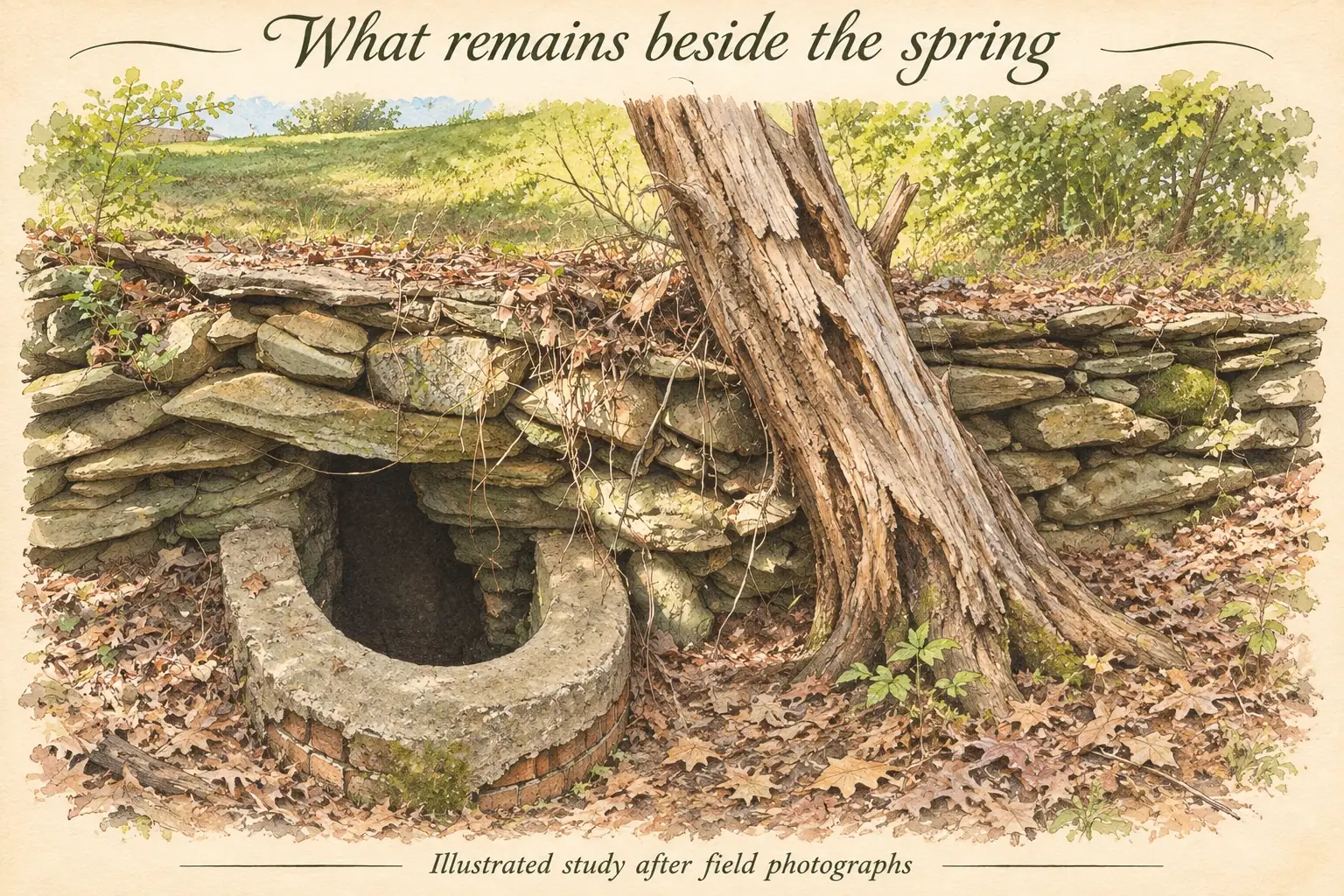
Further archival photographs and promotional records may help make those comparisons. For now, the distinction stays visible: the photograph documents surviving remains; the drawing helps the eye follow their shapes; the advertisement preserves a sales pitch.
The next time you encounter a grand claim about an old town, look for the quieter words beneath it: planned, contracted, opened, closed. They can turn a familiar legend into a much more interesting human story.
Choose the next part of the story
- Walk from the museum’s hotel to the spring grounds — photographs, field observations and carefully labeled imagined scenes.
- Follow the families beyond the boom — the wider story of investment, vineyards and lives that continued.
Have a photograph, letter, company circular or family account? Share a source or memory. Tell us who kept it, any date or name written on it, and whether the account was witnessed or passed down. A small record may answer a question a grand advertisement cannot. Please obtain permission before entering private property.
Sources, evidence and research still underway
- The Dalles Times-Mountaineer, March 1, 1890, page 3. Company advertisement. Claims are attributed to the advertiser; no financial or health claim is endorsed.
- Tallapoosa Commercial Historic District, National Register nomination, historical narrative, especially printed pages 13–18. Later historical synthesis, used here for the company chronology. Company failure is distinct from the hotel’s later operating history.
Read another local story
 Tallapoosa’s hotel above the quiet springsRemastered from a print supplied by Jackie Jones’s family. Colors and fine details interpreted; original artist/date unconfirmed.
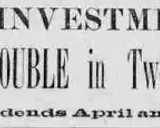 The city Tallapoosa was supposed to becomePublic-domain 1891 newspaper. Morrow County Museum / University of Oregon.
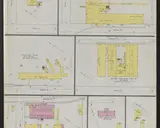 When Tallapoosa dreamed of becoming an industrial cityPublic-domain 1895 map; UGA Libraries / Digital Library of Georgia.
What story should we tell next?
Is there a person, place or piece of local history you’d like to see on Moss & Sons? Perhaps your family has photographs, letters, an old business record—or a memory you’d like to share.
You don’t need to have the whole story. Tell us what you know, and we can start there. Daniel reviews contributions and confirms permission before anything is published.
Know someone who would enjoy this? Pass it along.