FAITH CLOSE TO HOME · VILLA RICA, GEORGIA
The Villa Rica boy behind “Precious Lord”
Some songs reach us before their stories do. ‘Take My Hand, Precious Lord’ is one of those songs. Its author, Thomas Andrew Dorsey, was born in Villa Rica on July 1, 1899. Before his music reached famous singers, a west Georgia child was listening in church. His father preached and worked as a sharecropper. His mother played the organ. Church singing and the instrument at home helped form his ear. [1]
In this story
A song with roots close to home
Villa Rica still remembers that beginning. A historical marker identifies the early influence of Mt. Prospect Baptist Church and a used pump organ at home. For readers around Haralson County, this is a local connection with a much wider reach: a musical education begun nearby eventually helped change the sound of American worship. [5]
Georgia Tom
The family moved to Atlanta in 1908. There, Dorsey encountered a different musical world, including the city's lively entertainment district. He later went north to Chicago and became known as Georgia Tom. He worked in blues, including performances with Ma Rainey, and developed a musical language that could carry both pain and feeling with unusual directness. [1] [2]
His movement toward sacred music was a long struggle. PBS's account describes periods of serious illness, recovery, and renewed religious commitment before the family tragedy for which he is most remembered. Some churches resisted the sound of blues entering worship. The familiar story should therefore be told carefully: Dorsey was already wrestling with faith and writing religious music before 1932. [2]
The loss behind the prayer
In 1932, Dorsey's wife, Nettie, died in childbirth, and their infant son died soon afterward. His later recollection, reproduced by hymn scholar C. Michael Hawn, describes receiving the news while away singing in St. Louis. He returned to grief that shook his desire to serve GOD and to continue writing sacred music. [1] [3]
Dorsey remembered a friend taking him to a music school, where he sat at a piano. He drew on an older hymn tune associated with ‘Must Jesus Bear the Cross Alone?’ and shaped his own words around it. From that encounter came ‘Precious Lord.’ The song's history includes remembered music, the presence of a friend, and a grieving man reaching toward GOD. [3]
A reader who has buried someone may understand why this matters. Grief does not always arrive with clear sentences. Sometimes prayer begins with the simple need to be held up. Dorsey's song gave that need a form other people could sing. We can receive that gift without pretending to explain why his family suffered.
An instrument that remains
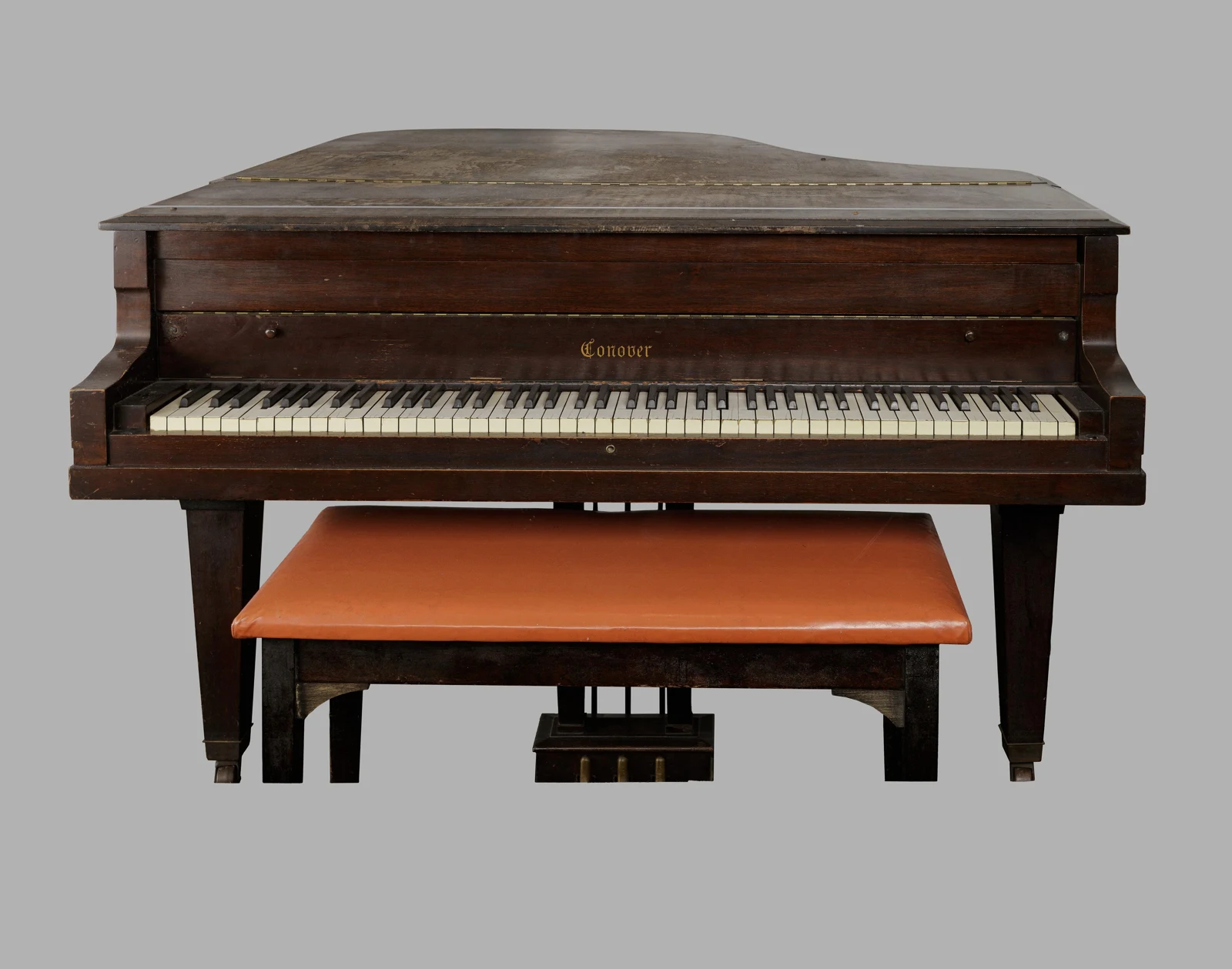
One tangible part of Dorsey's working life survives in the Smithsonian: a Conover baby grand piano used for rehearsals at Chicago's Pilgrim Baptist Church. The museum records that, after the church acquired new instruments, this piano went to pastor Junius C. Austin's home, where Dorsey and others continued playing it. [4]
The piano is a useful way into the story. It places the celebrated composer among ordinary acts of preparation: rehearsing, teaching, returning to the keys. It should be captioned accurately as a piano he used at Pilgrim. The museum's record does not identify it as the instrument on which he wrote ‘Precious Lord.’ [4]
What we carry home
Dorsey helped organize the National Convention of Gospel Choirs and Choruses in 1933 and worked with Mahalia Jackson. His influence extended through performers, congregations, and the practical work of sharing songs. He lived until 1993, having become widely known as the father of gospel music. [2]
Christian hope gives room for tears. Jesus wept beside Lazarus's grave before calling him out of it; Paul taught believers to weep with those who weep (John 11:35; Romans 12:15). Neither passage asks the grieving to perform cheerfulness. The hope of the gospel rests in Jesus Christ, who died and rose again, and whose grace cannot be earned by a brave face.
That is a fitting way to hear this Villa Rica story: with gratitude for the music, tenderness toward the family behind it, and attention to the neighbor whose grief is still fresh. A song can give us words. We can also give someone our presence.
Sources and further reading
- ‘Georgia Tom’ Dorsey — New Georgia Encyclopedia
Early life and career chronology. - This Far by Faith: Thomas Dorsey — PBS
His musical and religious development before and after 1932. - History of Hymns: ‘Precious Lord, Take My Hand’ — C. Michael Hawn
Dorsey’s later recollection; hymn-tune history. - Piano from Pilgrim Baptist Church used by Thomas Dorsey — Smithsonian NMAAHC
Catalog of the surviving rehearsal piano. - Thomas A. Dorsey Historical Marker
Villa Rica marker transcription.
Read another local story
 The Cartersville preacher behind the RymanPublished in 1907; public domain in the United States.
 After the tornado, Goshen kept gatheringNational Weather Service, Birmingham · Public domain.
- Faith close to home
Share a photo, memory or landmark
Daniel reviews contributions before anything appears publicly.
Know someone who would enjoy this? Pass it along.